Model breed · FCI 45
Bernese Mountain Dog
Berner Sennenhund
A large, strong and agile Swiss working dog with harmonious structure, stable temperament and one of the most recognisable tricolour coats in the canine world.
Dogs64–70 cm66–68 cm ideal
Bitches58–66 cm60–63 cm ideal

DogOrbis
The Bernese, at a glance
DogOrbis breed standard
What a correct Bernese should look like
DogOrbis turns the official standard into an original visual explanation. We do not copy its illustrations: we build a clear reference for proportions, structure, head, movement and colour.
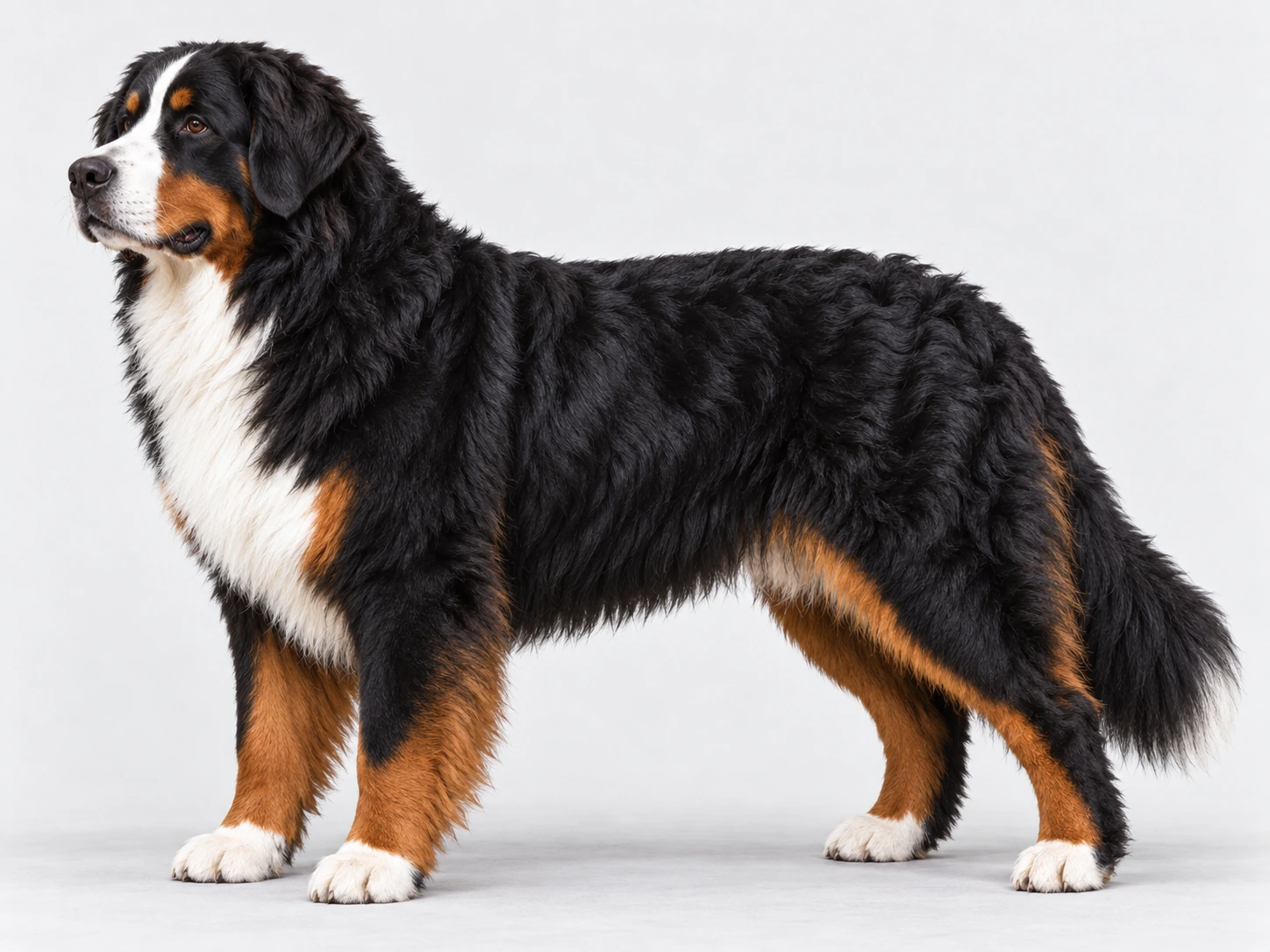
9 : 10altura : longitud2 : 1altura : pecho
Body proportion
Height at withers : body length = 9 : 10. Compact and powerful rather than elongated.
Chest depth
Height at withers : depth of chest = 2 : 1. Broad and deep, reaching the elbows.
Head
Strong and balanced to the whole, never excessively massive. Approximate head : muzzle ratio = 2 : 1.
Movement
Sound and balanced with good reach in front and drive from behind.
Colour
Jet black base, rich tan markings and clean symmetrical white markings.
Tail
Bushy, reaching at least to the hocks and hanging down at rest.
DogOrbis Visual Standard
DogOrbis illustrated standard
An original plate for learning the breed at a glance: views, proportions, head, eyes, ears, coat, colour, feet and tail.
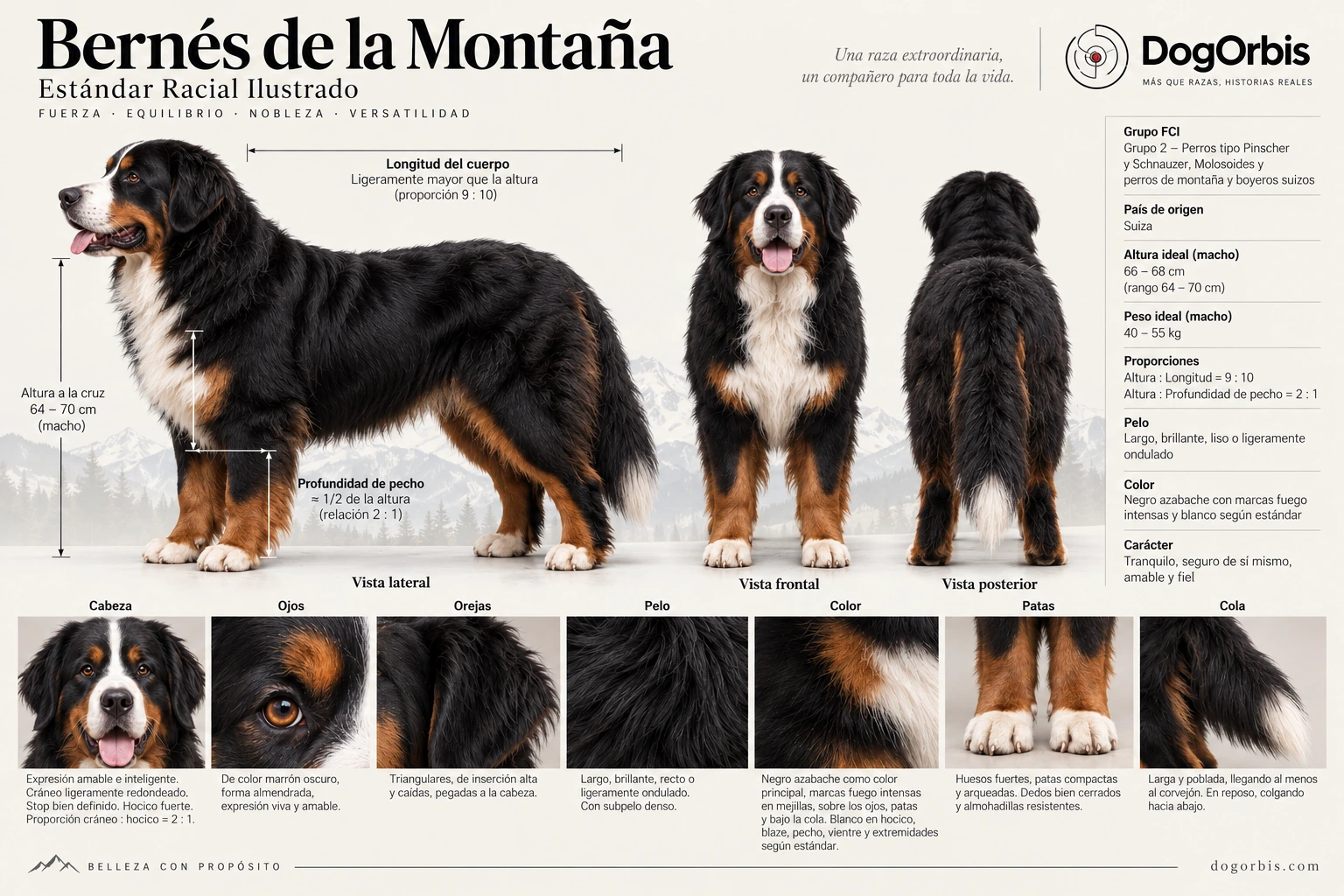
DogOrbis · FCI 45 · 9:10 · 2:1
Dürrbächler
From Swiss farm dog to family companion
The Bernese developed as a farm dog in the prealpine regions around Bern, working as guard, draught and cattle dog. Organised breeding began in the early twentieth century, and the breed became a versatile family and working dog known worldwide.
Is a Bernese right for you?
A strong match if you want
- A large dog closely bonded to family
- A stable, good-natured temperament
- A trainable and versatile companion
- Presence, power and calm
Think carefully if you cannot manage
- The size and strength of a large dog
- Early socialisation and training
- Regular care of a long coat
- Choosing lines with transparent health information
Informed purchase
Health: what to ask before buying a puppy
BMDCA minimum recommendations include hips, elbows, eyes, heart and degenerative myelopathy, plus one additional test among von Willebrand disease, thyroid or histiocytic sarcoma risk. Completed testing does not mean every result is normal; review the actual results and family history.
Grancos is the first Bernese Mountain Dog breeder profile incorporated into DogOrbis.
View Grancos →Editorial basis and provenance
← Back to breedsMorphology, proportions, temperament, size and colour are based on FCI Illustrated Standard No. 45 approved by the Swiss Club of Bernese Mountain Dog. Health guidance references Bernese Mountain Dog Club of America testing recommendations. DogOrbis provides its own writing and design.